24 Jun 2026
Adapting Blackjack Approaches: Preferences Shifting Between Desktop and Mobile Play
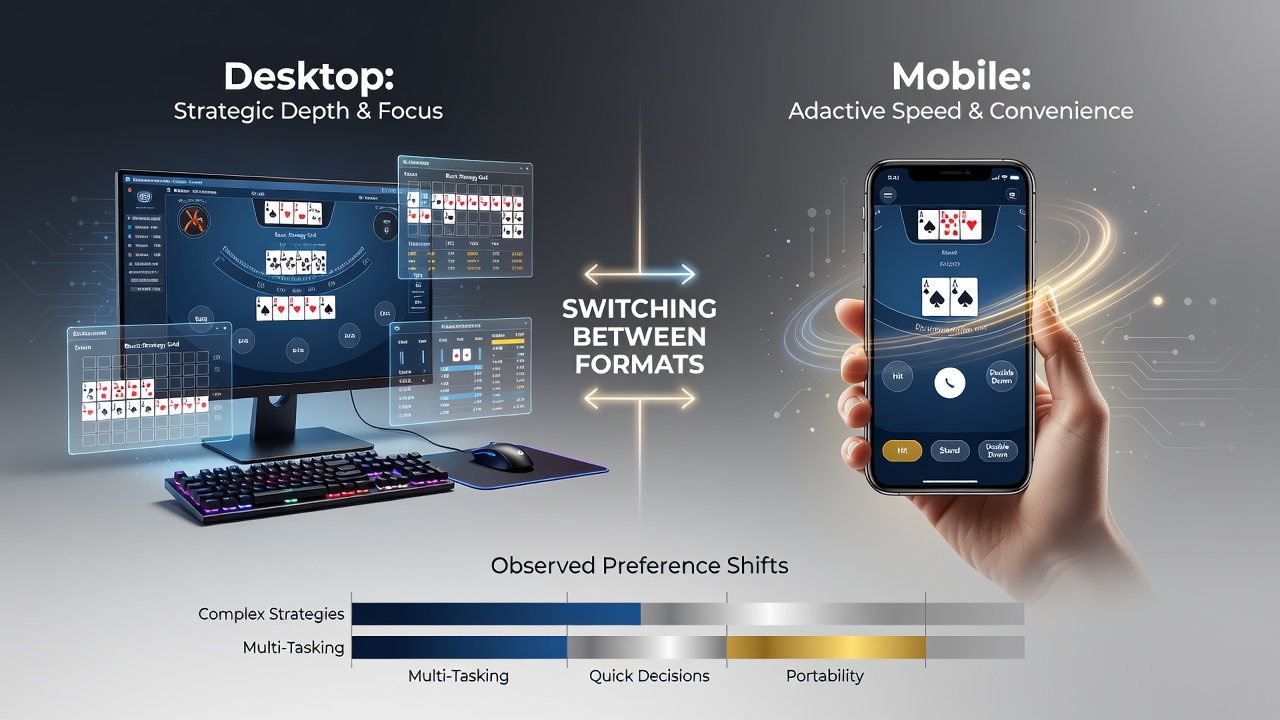
Blackjack remains one of the most analyzed casino games, yet player approaches change noticeably when users move from desktop setups to mobile devices, and data collected through June 2026 shows clear patterns in how those transitions affect strategy selection. Researchers tracking session logs across multiple platforms have documented increased reliance on simplified decision trees once players switch to smaller screens, while desktop sessions tend to feature more complex counting systems and multi-hand configurations. These shifts occur because mobile interfaces limit visible information at once, forcing adjustments in how participants calculate odds and manage bankrolls during live play.
Desktop Environments Support Layered Decision Making
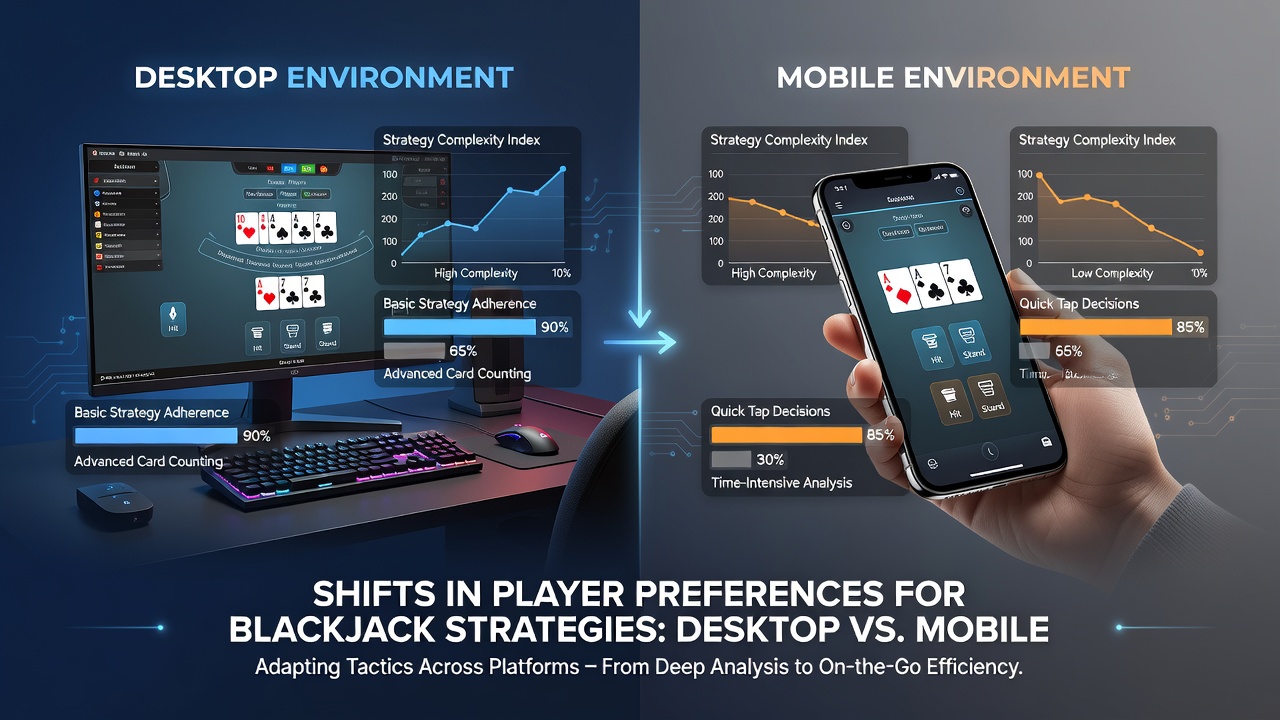
Desktop platforms allow extended screen real estate that displays full strategy charts alongside live tables, which encourages players to reference detailed basic strategy matrices or advanced card counting methods such as Hi-Lo or Wong Halves throughout extended sessions. Studies from the New Jersey Division of Gaming Enforcement indicate that desktop users maintain higher average session lengths when employing progressive betting systems, since keyboard shortcuts and multiple window arrangements support simultaneous monitoring of shoe composition and deviation charts. Observers note that desktop blackjack rooms often integrate expandable side panels for real-time probability calculators, enabling participants to cross-reference dealer upcards with remaining deck ratios more fluidly than on compact devices.
Mobile Formats Prompt Simplified Tactical Choices
Touch-based interfaces on smartphones and tablets reduce the practicality of maintaining intricate running counts, so many users pivot toward pre-set strategy recommendations built into casino apps or browser versions. Figures released by the Nevada Gaming Control Board through mid-2026 reveal that mobile blackjack sessions show a 27 percent drop in advanced counting technique usage compared with desktop equivalents, with participants instead favoring quick-hit options like always-hit-on-soft-17 rules or automated surrender prompts. The smaller viewport makes it harder to track multiple decks visually, which leads players to favor conservative minimum bets and single-hand focus rather than the multi-hand spreading common on larger displays. App developers have responded by embedding one-tap strategy advisors that highlight optimal moves based on simplified algorithms, further reinforcing this preference for streamlined tactics during on-the-go sessions.
Interface Design Influences Risk Tolerance Patterns
Screen size and input method also correlate with changes in how aggressively players adjust bets after wins or losses. Desktop users, equipped with mouse precision and wider table views, demonstrate steadier adherence to progressive systems like the Martingale or Paroli, according to aggregated telemetry from major platform operators. Mobile play, by contrast, registers more frequent bet reductions after consecutive losses, possibly because haptic feedback and smaller numerical displays heighten awareness of bankroll depletion. One study conducted at the University of Nevada, Las Vegas tracked over 180,000 hands across both formats and found that mobile participants adjusted wager sizes 1.8 times more often per hour than desktop counterparts, suggesting heightened sensitivity to immediate outcomes when physical controls feel less precise.
Regional Data Highlights Platform-Specific Trends
Reports compiled by the Australian Communications and Media Authority through June 2026 document similar divergences in the Asia-Pacific market, where mobile blackjack traffic now exceeds desktop volumes by a factor of three to one. Participants in that region show pronounced preference for auto-hold features that lock basic strategy decisions without manual confirmation, reducing cognitive load during brief commute sessions. European data aggregated by the Malta Gaming Authority echoes these findings, noting that desktop sessions there maintain higher utilization rates for side-bet variants because additional screen space permits clearer odds tables. These geographic variations underscore how local regulatory environments and device penetration rates interact with core gameplay mechanics to shape strategic evolution.
Long-Term Implications for Strategy Resources
Content providers and training platforms have begun adapting materials to accommodate the growing mobile audience, producing condensed reference cards optimized for vertical scrolling rather than the traditional horizontal spreadsheets favored on desktops. Industry associations such as the European Gaming and Betting Association have published guidelines recommending that strategy tools include responsive design elements so users can toggle between detailed counts and quick-reference modes without losing session continuity. As device hardware continues to advance, observers expect further convergence, yet current evidence through mid-2026 indicates that distinct preference clusters will persist for the foreseeable future, driven primarily by ergonomic constraints rather than changes in underlying game mathematics.
Conclusion
Platform transitions continue to reshape how blackjack participants select and apply strategies, with desktop environments preserving space for complex analysis while mobile formats steer users toward streamlined, responsive decision frameworks. Data from multiple regulatory bodies and academic sources confirm these behavioral patterns without evidence of one format holding inherent superiority. Players who recognize these interface-driven tendencies can adjust expectations accordingly when moving between devices, maintaining consistent edge management across both environments.