22 Aug 2026
Payout Timelines for Cryptocurrency in Digital Table Game Platforms

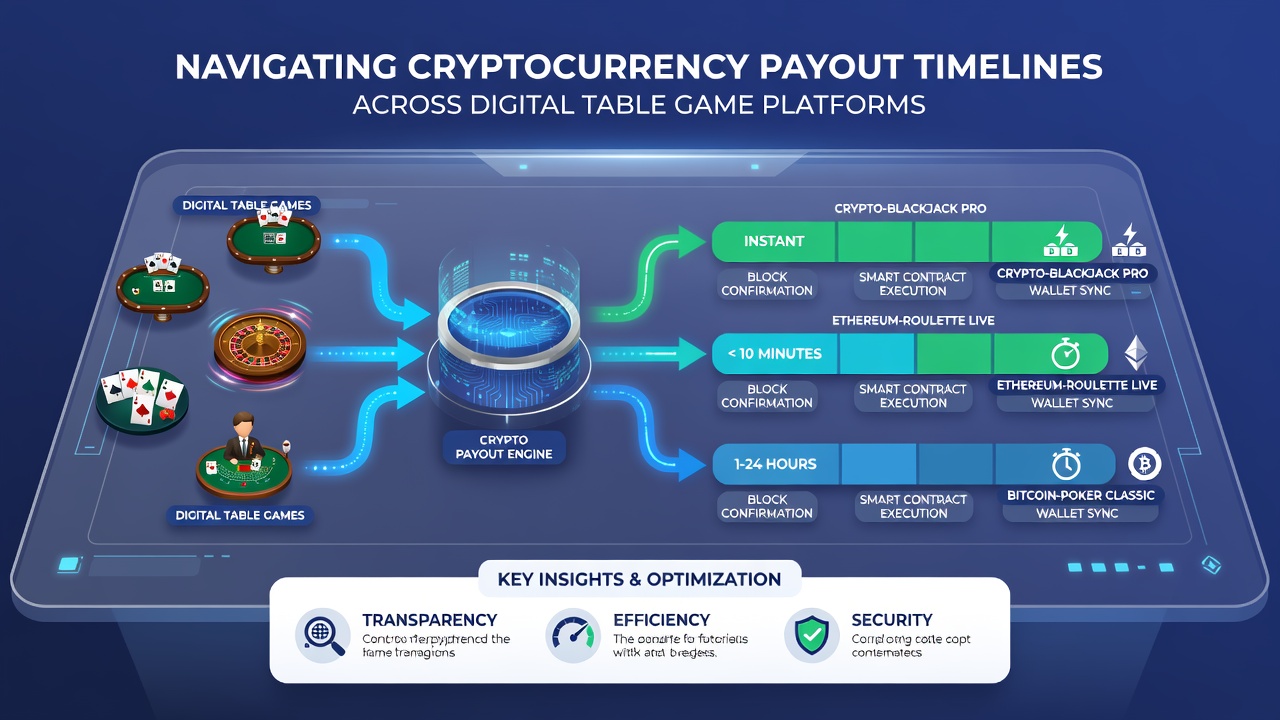
Digital table game platforms that accept cryptocurrency handle payouts through blockchain networks where confirmation times vary by coin type and current network load, while operators apply their own verification steps before releasing funds to player wallets. Those who operate these sites process withdrawals for games such as blackjack, roulette, and baccarat using the same crypto rails that power deposits, yet the end-to-end duration depends on factors that include minimum confirmation requirements, platform approval queues, and external chain congestion.
Core Variables That Shape Withdrawal Durations
Blockchain networks impose baseline speeds that operators cannot alter, so Bitcoin transactions typically require between thirty minutes and several hours for sufficient confirmations whereas Litecoin and certain stablecoins clear in under twenty minutes during normal conditions. Platform policies add another layer because most sites mandate identity checks or security reviews before any payout moves forward, and these manual steps can extend the total timeline from hours into one or two business days when volume spikes. Observers note that table game operators often mirror the verification procedures used across other verticals, yet the higher average bet sizes common in blackjack and poker rooms sometimes trigger additional review layers that lengthen the wait.
Network-Specific Timelines Observed in 2026
Figures from August 2026 reveal that Ethereum-based stablecoin withdrawals averaged four to six hours from request to wallet credit on major table game platforms, while Bitcoin cashouts stretched to eight or twelve hours when mempool backlogs exceeded normal thresholds. Litecoin and Ripple transactions moved faster in the same period, frequently completing within ninety minutes once the operator released the funds, because those chains maintain higher throughput under comparable demand. Data shows that operators publishing real-time status dashboards allow players to track each stage, from internal approval through blockchain broadcast, and this transparency reduces uncertainty around expected arrival windows.
Platform Policies and Their Impact on Speed
Many sites set tiered withdrawal limits that affect how quickly larger sums clear, with smaller amounts under a few thousand dollars often auto-approved while six-figure requests route through compliance teams. Those who have examined payout logs across multiple platforms find that instant approval features tied to prior KYC verification cut total time by roughly half compared with first-time withdrawal requests. Research indicates that operators who integrate automated risk scoring tools shorten the internal review phase, allowing the blockchain portion of the process to begin sooner and thereby compressing overall timelines even when network conditions remain unchanged.
Regulatory Context Across Regions
European operators licensed under frameworks such as those overseen by the Malta Gaming Authority must maintain detailed transaction records, yet these requirements rarely extend payout windows beyond the technical limits of the chosen cryptocurrency. In North America, platforms serving jurisdictions that permit crypto gambling align with emerging state guidelines that emphasize consumer protection without imposing fixed processing deadlines, leaving speed largely determined by chain performance and operator efficiency. Reports compiled by the European Gaming and Betting Association highlight that consistent communication about expected timelines correlates with fewer player inquiries, suggesting that clear disclosure of network and policy variables improves operational smoothness.
Practical Steps Players Encounter
Users typically initiate a withdrawal by selecting the cryptocurrency and entering a wallet address, after which the platform displays an estimated arrival window based on current chain activity. Confirmation emails arrive once internal approval occurs, and a second notification follows once the blockchain transaction receives the required number of validations. Those who monitor mempool explorers in parallel with platform updates can anticipate delays when congestion rises, allowing them to time requests during lower-traffic periods and thereby reduce overall wait times.
Conclusion
Cryptocurrency payout timelines on digital table game platforms emerge from the interaction of immutable blockchain speeds, operator verification protocols, and fluctuating network conditions, with August 2026 data illustrating that stablecoins and faster chains deliver quicker results than Bitcoin under most scenarios. Players who understand these layers can select coins and platforms that align with their preferred arrival windows while staying within regulatory boundaries that govern licensed operators across multiple regions.